


Why is Holi celebrated?
Holi is a popular ancient and auspicious Hindu festival. The name Holi comes from the name of the Demon Queen Holika.
A vibrant spring festival known as the “Festival of Colours,” that signifies the triumph of good over evil. The blossoming of love and for many it’s a festival day to meet others, play and laugh, forget and forgive, and repair broken relationships.
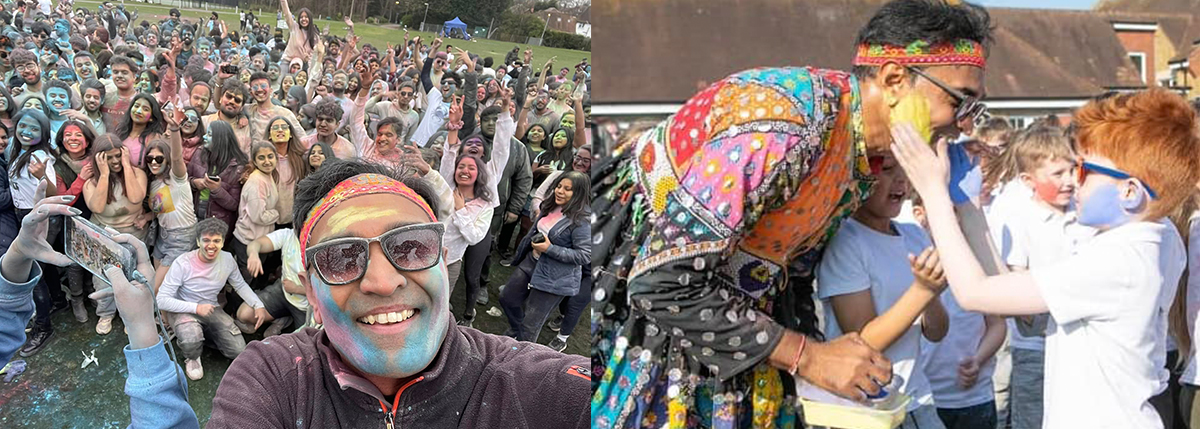
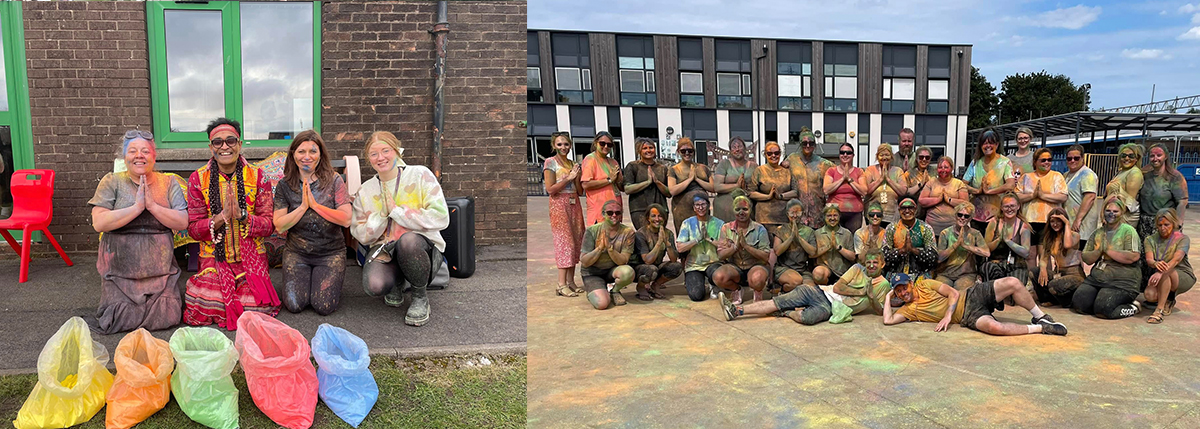
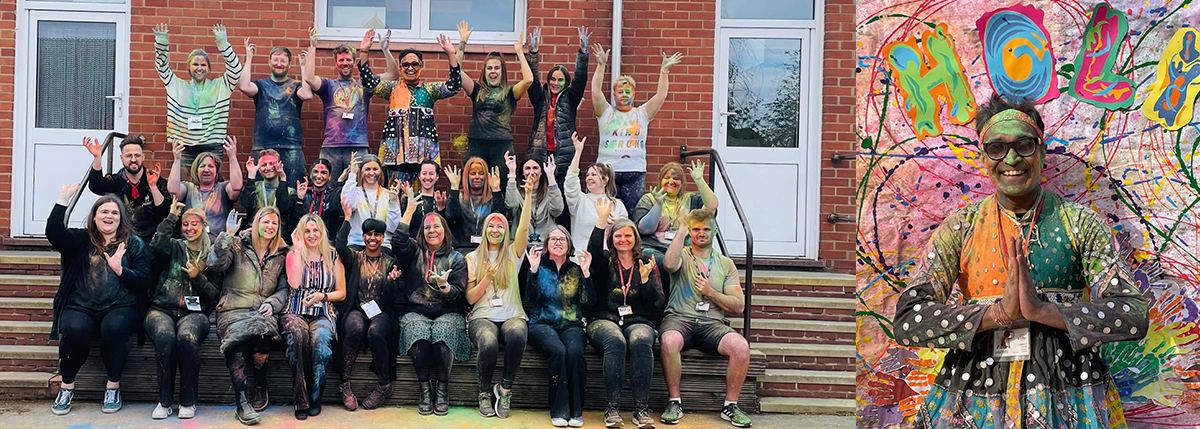
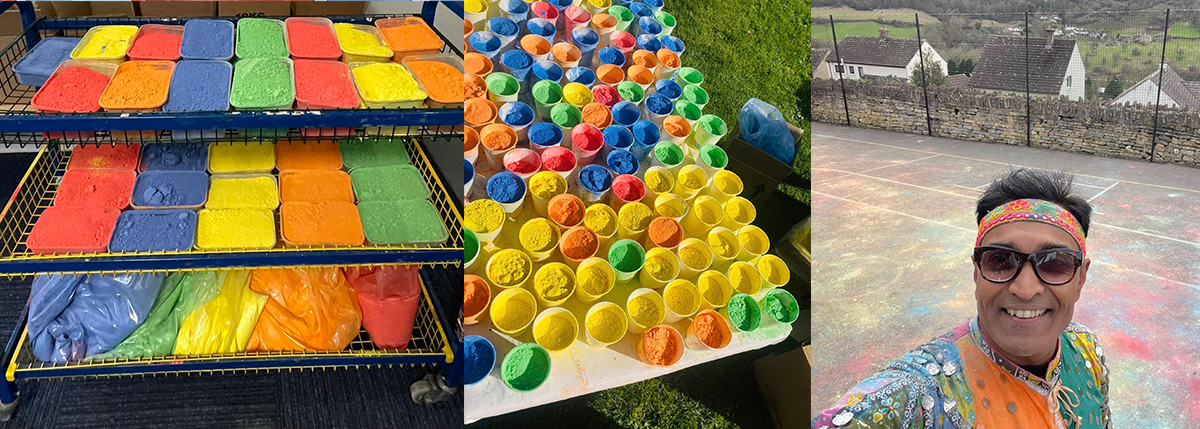
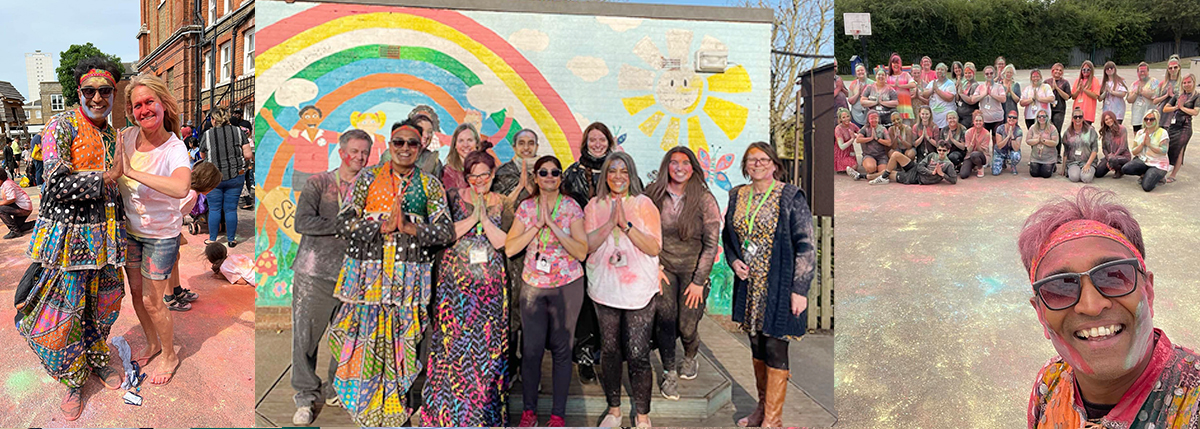
Commonly Holi is celebrated by applying/throwing coloured powder at each another and the power of colour is never more prominent than at Holi festival.
Together we celebrate Holi by touching one’s soul through the colours of joy, happiness, love, peace and prosperity. Anyone and everyone are fair game, friend or stranger, rich or poor, men or women, children or elders.
How is Holi celebrated?
- Day 1: Holika Dahan
Holika Dahan a bonfire that reminds us of the story of Holika and the importance of respecting others, avoiding jealousy, and not judging others.
- Day 2: Rangwali Holi
Rangwali Holi is marked by the playful throwing of colours, bringing people together in unity, joy, and celebration. Food, music and dance is enjoyed by all on this day where Indian sweets are exchanged and festive foods are enjoyed.
The Story of Holika
- Hiranyakashipu was a powerful demon king who wanted to be worshipped as a god.
- His son, Prahlad, was a devoted follower of Lord Vishnu, which enraged Hiranyakashipu.
- The king's sister Holika, who had a magical cloak that made her immune to fire, sat in a bonfire with Prahlad on her lap, hoping to burn him alive.
- But because of her evil intentions and Prahlad’s pure devotion, the cloak flew off Holika and protected Prahlad instead — Holika burned, and Prahlad was unharmed.
The moral of the story of Holika is to respect others and do not judge or be jealous by others.